ServicesRoof Repair
Roof Repair in La Rue, OH
We trace each leak back to the flashing, boot or shingle that let water in, repair that one spot and give you a straight read on the years left in the rest of your roof. Photos and a written estimate let you schedule the fix before wet decking starts to rot.
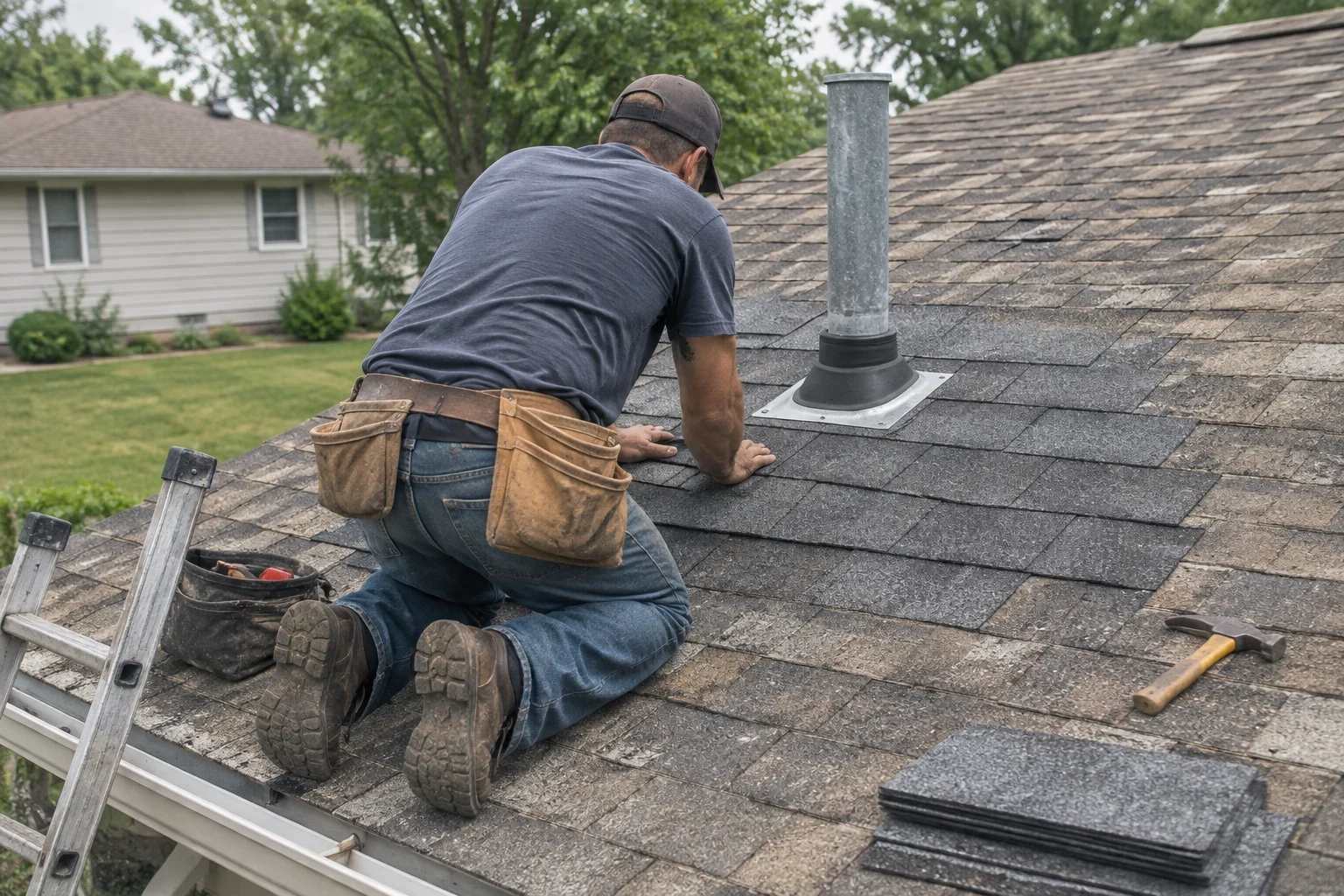
When a repair is the right call
Most leaks start at a detail, not in the middle of a field of shingles. Pipe boots crack, step flashing pulls away from a sidewall, a chimney's counterflashing loses its sealant, or a few shingles lose their seal strip and start lifting. When the rest of the roof still lies flat and holds its granules, fixing that one detail is usually the sensible move.
Repair stops making sense when the shingles themselves are worn out: curling across whole slopes, bare spots where granules have washed into the gutters, or soft decking in several places. In that case we say so and walk you through roof replacement as something to budget for, rather than patching a roof that will leak somewhere else next spring.
Either way, you know where your roof stands and can plan the next step on your own timeline.
What a roof repair from us includes
- Tracking the leak from inside
- Where possible we begin in the attic, following stains and damp insulation to where water enters. Water tends to travel along a rafter or under the deck before dripping, so the ceiling stain is seldom right under the cause.
- Pipe boots and flashing
- Cracked neoprene pipe boots get replaced, step flashing and counterflashing at chimneys and walls get reset or renewed, and valley edges get resealed. These metal and rubber pieces tend to give out years ahead of the shingles.
- New shingles where needed
- We pull missing, cracked or unsealed shingles and put in new ones, nailed along the nail line, hand-sealing tabs where the factory strip has quit. We choose the closest color and profile still in production.
- Replacing rotted decking
- Plywood or OSB that has gone soft under a leak is cut out back to the rafters. We fasten a new panel, add fresh underlayment and reinstall the shingles. Shingling over rotted wood just covers it up.
- Problem eaves that ice up
- If an eave fills with ice each winter, we look at it more closely. During a repair we can put ice and water membrane along that edge and show you the ventilation or insulation gaps behind it.
- Photos before and after
- We photograph the damage and the completed fix, so you see exactly what we did, and we note anything else on the roof to keep an eye on.
Signs your roof needs repair
Ceiling or attic stains
Brown rings on drywall or darkened spots on the underside of the decking mean water has been getting in, sometimes for months. The longer it runs, the more insulation and wood it ruins.
Shingles in the yard
A shingle on the lawn or a lighter patch on a slope means the nailing or the seal strip let go. That exposed spot lets water reach the underlayment directly.
Popped nail heads
Freeze-thaw cycles push nails up through the shingle above them. Each raised nail head is a small hole waiting for the next rain.
Damp near a chimney or vent
Stains near a chimney, plumbing vent or bathroom fan usually point to failed flashing or a cracked boot rather than worn shingles.
Heavy granules in the gutters
A new roof sheds some loose granules at first. When an older roof leaves drifts of them in the downspouts, sunlight is reaching bare asphalt and breaking it down, so a repair may only buy time.
How a repair visit works
- 1
Start with a phone call
Describe what you notice and where it shows up. We'll ask how old the roof is, which shingle you have if you know, and when the leak appears, for example only with wind-driven rain or only as snow melts.
- 2
Find the source and record it
We check the roof and the attic, locate where water gets in and take photos. Your written estimate puts each repair on its own line, so it's clear what is pressing and what can hold off.
- 3
Pick a date
Most minor leaks can sit briefly without causing harm, so you choose a day that suits you. We keep an eye on the weather, since shingle sealant bonds best in warmth and flashing is best installed when it's dry.
- 4
Fix it and tidy up
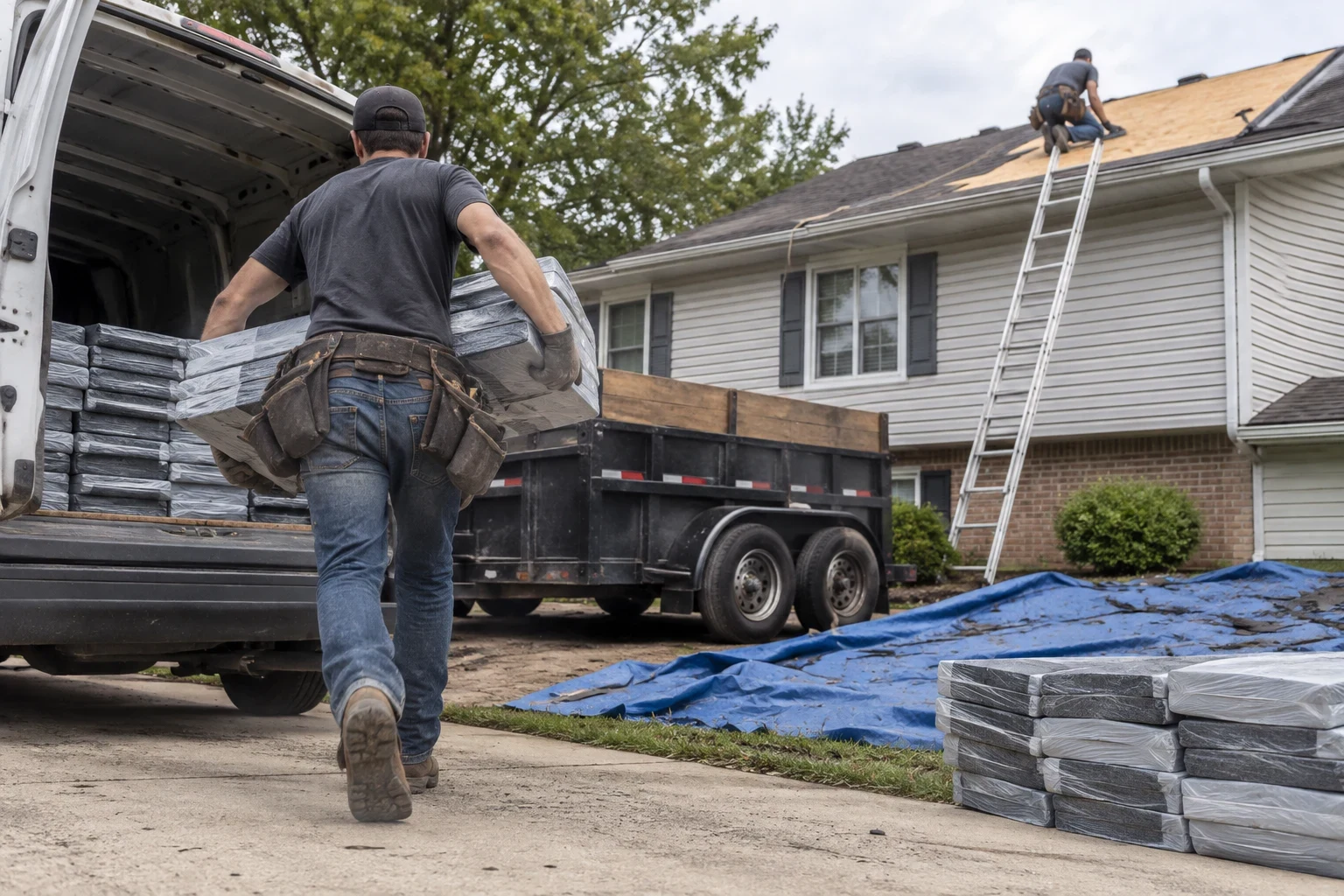
Before work begins, we cover the beds and plants below. After the repair, a magnet sweeper goes over the lawn and driveway to catch loose nails before they reach a tire or bare foot. We send you photos of the finished repair before we head out.
What drives the price of a roof repair
We price a repair by what it takes to fix the underlying cause, so two leaks that look alike from inside can land at very different numbers. Each item gets its own line on the written estimate, and we point out anything that might change once old material comes up.
- The part that failed
- Replacing a split pipe boot is quick and uses little material. Cutting and fitting new step flashing and counterflashing around every side of a chimney is a bigger job.
- Damage you can't see yet
- Rotted decking usually stays hidden until the shingles come up. If it turns up, we show it to you before we replace anything.
- Slope and reach
- A steep roof calls for added safety gear, and work over a second story or a porch roof takes longer to set up.
- Finding a shingle match
- If your shingle has been discontinued or is no longer made, locating the closest replacement takes more time. How well it matches affects the cost and how the repair looks from the street.
- Combining repairs
- Taking care of several small problems in a single trip usually costs less than a separate visit for each, which is one reason to plan repairs rather than wait.
Roof repair questions
Something not covered here? (740) 913-4252
Can you repair one section, or do I need a whole new roof?
Most roofs with one or two problem spots can be repaired. If the shingles are brittle, curling or bald across most slopes, a repair will hold only until the next weak spot opens. We tell you which situation you're in and, if replacement is coming, roughly how long you have to plan for it.
Will the new shingles match the old ones?
We use the closest available product in color and profile. New shingles usually look a little brighter until they weather, and the difference fades over a season or two. On discontinued lines we go over the options with you before starting.
Can roof repairs be done in winter?
Some can, such as flashing work or replacing a pipe boot. Shingle seal strips need warmth to bond, so in cold weather we hand-seal tabs and can recheck them when temperatures climb. We explain what makes sense now and what is better done in spring.
Why does my roof only leak some of the time?
Intermittent leaks usually come from wind-driven rain hitting a flashing gap from one direction, or from ice dams pushing meltwater under the shingles at the eave. Telling us when the leak appears helps narrow down the source before we're even on the roof.
How do I keep small repairs from turning into big ones?
Have the roof checked after a hard winter and keep the gutters clear so water drains off the eaves. A yearly roof inspection catches cracked boots and lifted shingles while they're still small fixes. If your gutters or soffit and fascia need attention, we'll mention that too.
Get ahead of the next leak
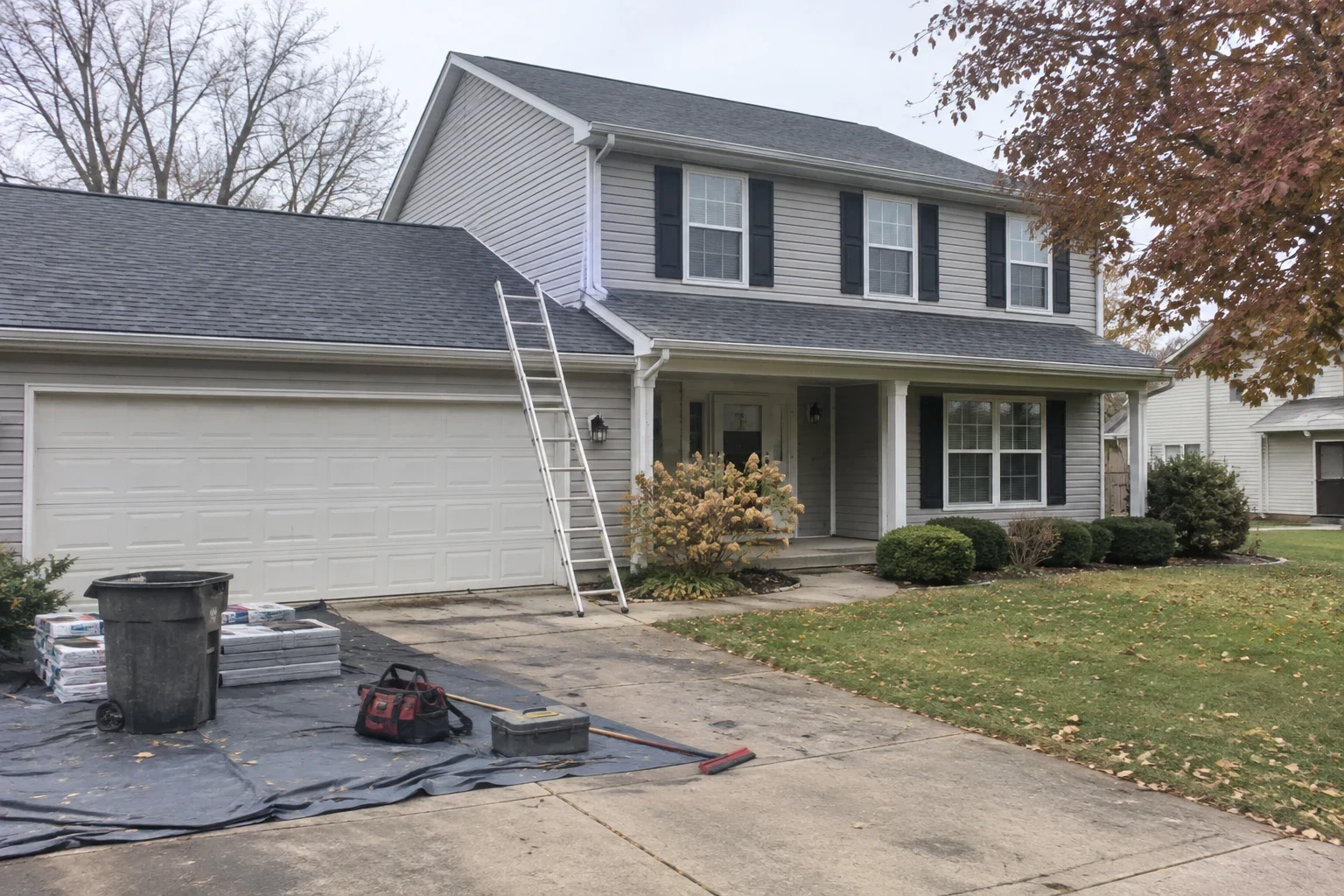
Give us a ring and tell us what you've noticed, whether it's a ceiling stain, a slow drip or a bare spot where a shingle used to be. We'll set a time to find the source and put the fix in writing, and you pick when the repair happens.